The Smallest Wonders: Why Exploring Nature with Children Matters
This article was written by Michael Carvalho, Esq., MECT Trustee, and was originally featured in our Spring into Summer 2026 Newsletter
In the quiet, shaded corridors of the Wilderness Conservation Area, the air is thick with the scent of damp earth and the anticipation of spring. For a child, this isn’t just a forest; it is a living laboratory where every overturned leaf and shimmering puddle holds a secret. As the Manchester Essex Conservation Trust (MECT) continues its mission to preserve these vital landscapes, we often focus on the ecological data—the acreage saved or the species protected. However, there is a profound, intrinsic value in the human connection to these lands, particularly when viewed through the eyes of the next generation.
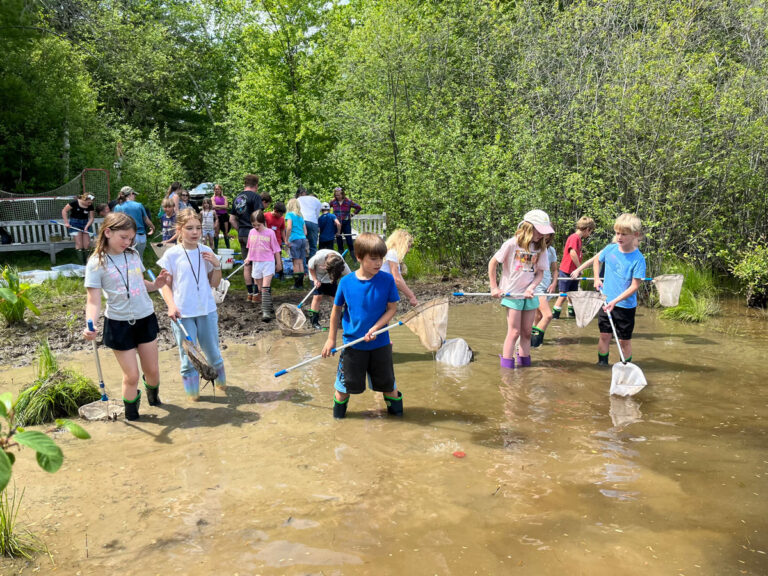
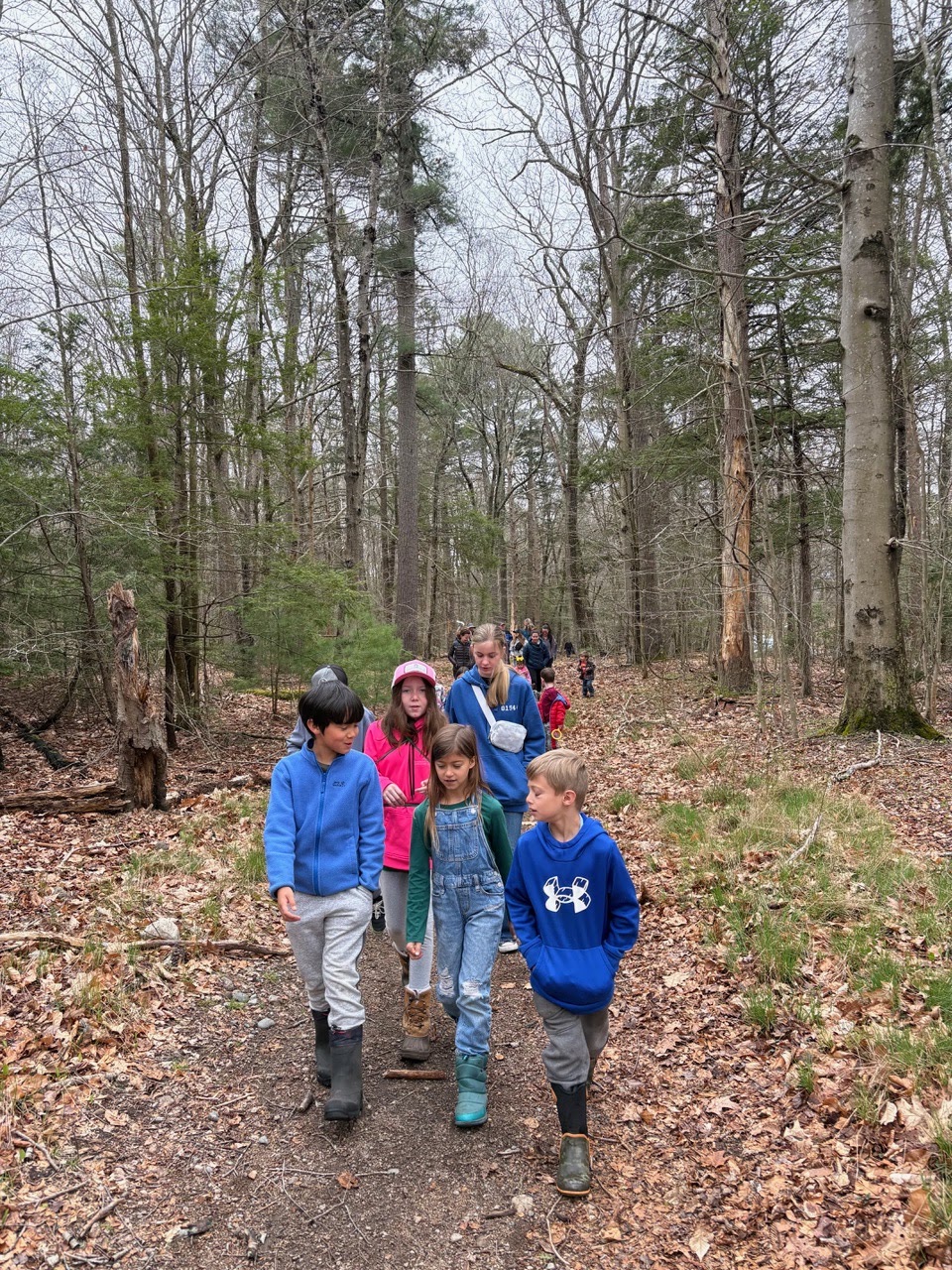
On a recent Sunday morning, I had the pleasure of venturing into the heart of the Wilderness Conservation Area with my son, Zac. Sharing time together in nature over the years has provided many cherished memories. Our mission for this day was specific: to locate and document the ephemeral “jewels” of the spring woods—vernal pools. With a field guide in hand and boots sinking into the mud, Zac wasn’t just walking through the woods; he was practicing the foundational skills of a naturalist. We spent hours peering into the tea-colored depths of these seasonal wetlands, documenting the translucent, gelatinous egg cases of wood frogs and spotted salamanders.
Watching him identify the creatures that exist only in these fleeting habitats—reminded me that the true value of conservation is often measured in moments of discovery
The Science of “Green Time”
The benefits of these excursions are backed by more than just parental sentiment. Evolutionary biologists often refer to “biophilia,” a term popularized by Edward O. Wilson, suggesting that humans possess an innate tendency to seek connections with nature. For children, whose brains are in a state of rapid neuroplasticity, “green time” acts as a potent developmental catalyst.
Studies in environmental psychology indicate that “unstructured play” in natural settings significantly improves a child’s` executive function—the ability to multitask, follow complex directions, and regulate emotions. Unlike the “directed attention” required by screens or classroom settings, which leads to cognitive fatigue, nature triggers “soft fascination.” This state allows the brain to rest and recover, reducing cortisol levels and increasing a child’s capacity for focused learning, and an adult’s need to simply decompress and enjoy the wonders of nature.
Being outside gets us out of our routine and nurtures our connection with nature. It makes us feel better.
Literacy in the Landscape
Beyond the psychological benefits, exploring areas like the Wilderness Conservation Area fosters a specific kind of literacy: Ecological Literacy. When a child like Zac documents the presence of egg cases, he is learning about the “indicator species” that signal a healthy environment. Vernal pools are unique because they are fish-free, providing a safe haven for amphibians that would otherwise be preyed upon.
Understanding these delicate cycles teaches children about the “interconnectedness” of biology. They begin to see that the forest canopy provides the leaf litter that feeds the pool, and the pool, in turn, provides the life that sustains the forest’s biodiversity. This science-based perspective shifts nature from being a “background” to being a complex, functioning system that requires our stewardship. These experiences also give parents and children powerful memories of shared discoveries to look back upon.
Building the Future Stewardship
We protect the things we love. The intrinsic value of these outdoor experiences lies in the transition from observer to protector. Science tells us that children who have significant positive experiences in nature before the age of 11 are statistically more likely to grow into adults who support environmental conservation.
By taking our children to explore MECT’s trails, we aren’t just giving them a hobby; we are ensuring the longevity of the land itself. When Zac finds a critter in a vernal pool, he isn’t just seeing a “bug”; he is forming a bond with a creature that relies on the very dirt he stands on. That bond is the strongest tool we have in the fight for a sustainable future.
MECT’s Wilderness Conservation Area remains open for all—a place where the next generation of scientists, poets, and protectors can get their boots muddy and their minds open.
References
1. Kellert, S. R., and E. O. Wilson, eds. The Biophilia Hypothesis. Island Press, 1993.
2. University of Cincinnati, Children, Youth and Environments Journal.
3. Orr, D. W. Ecological Literacy: Education and the Transition to a Postmodern World. State University of New York Press, 1992.
4. Wells, N. M., and K. S. Lekies. “Nature and the Life Course: Pathways from Childhood Nature Experiences to Adult Environmentalism.” Children, Youth and Environments, 2006.