
Conservation
MECT’s conservation work is focused on preserving ecologically important land for wildlife habitat, water quality protection, flood prevention, biodiversity, research, and passive recreation.
Measured and consistent effort since 1963 has resulted in the permanent protection of many special areas in Manchester and Essex. MECT holds title to approximately 1,500 acres of land in both communities. In addition, MECT holds 25 conservation restrictions that protect over 275 additional acres

Wilderness Conservation Area
In the beginning – our founders worked together to conserve single parcels of old family woodlots in Manchester, with a vision of preserving the green space that was rapidly disappearing. The work included developing an expertise for untangling lost and forgotten land ownership chains.The dream grew and spread to Essex woodlots, encompassing an area long loved for its shady carriage paths.
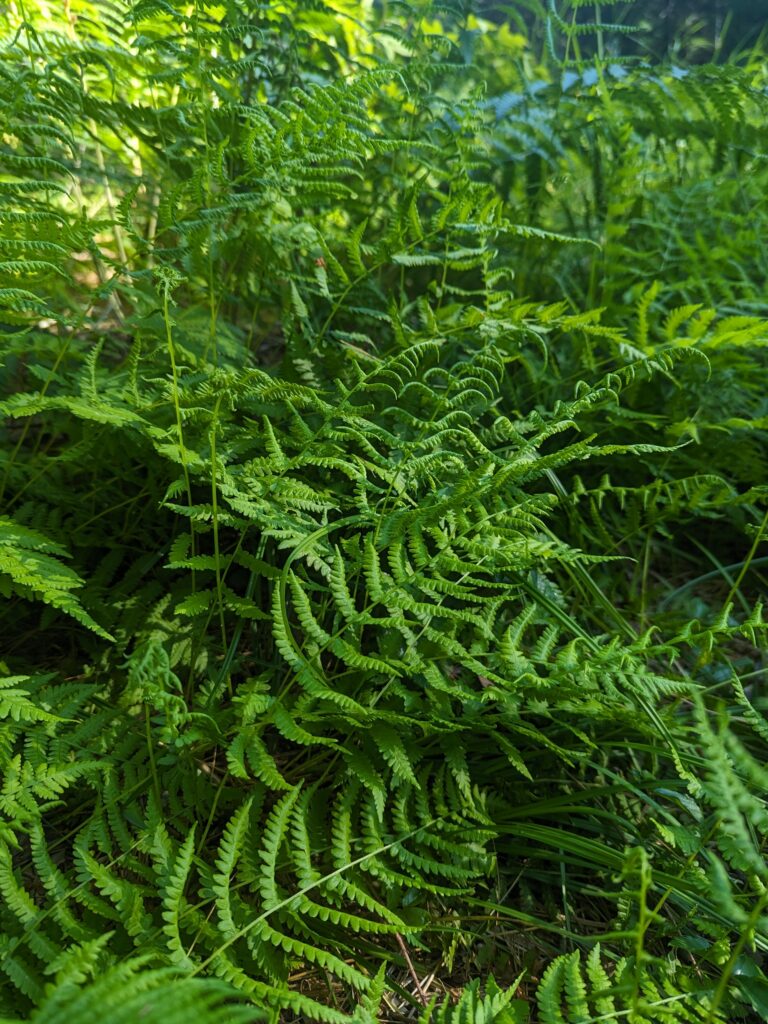
The WCA includes roughly 2,000 acres of contiguous woodlands. The terrain varies from cliffs and rocky outcrops to red maple swamps and pine, hemlock, and oak forests, interspersed with beech, maples, and wildflowers.
The land also provides critical public health benefits by filtering rainwater that becomes public drinking water and by storing stormwater during heavy rainfall events.
Because of large, unfragmented open space and undisturbed soils, the woods also contain unusual plant and animal species. Scientific studies have documented the presence of rare animals and plants. In addition to MECT, The Natural Heritage Program of the Commonwealth of Massachusetts, The Nature Conservancy, Essex County Greenbelt Association, and The Trustees of Reservations have all long supported efforts to save the woods, along with the Town of Manchester, and the Town of Essex, both of which have conservation ownership of some of the parcels.
Western Woods, Manchester
Much like the Wilderness Conservation Area, the Western Woods, which is in the northwest corner of Manchester, was preserved one small parcel at a time, often in cooperation with the Town of Manchester. The land has numerous trails, streams, wetlands and certified vernal pools. We continue to research ownership of the remaining parcels. Portions of the Western Woods are in the watershed for the town’s water supply.
Fire Tower, Essex
MECT, the Town of Essex, and Essex County Greenbelt have conserved many parcels between Southern Avenue and the Gloucester border for decades. MECT has recently acquired several additional parcels of this vital Saw Mill Brook watershed and biodiverse area, and is exploring more ways to protect and preserve the region noted by the state’s Natural Heritage and Endangered Species Program as “Priority Habitat for Rare Species”, and “BioMapCritical Natural Landscape”, and “BioMap Core Habitat: Forest Core”, while safekeeping the recreational opportunities of this land.
Powder House Hill, Manchester
Sitting in the heart of Manchester, this high point has historical significance, recreational trails and conservation value. The Town of Manchester and the Manchester Essex Conservation Trust have conserved this area for decades, preserving a large natural setting within walking distance from the center of town.


Land Defense
Often the results of defending land are invisible to the community – until you look for what is NOT there. The Manchester Essex Conservation Trust has been instrumental in defending the Wilderness Conservation Area from large power transmission infrastructure and fragmentation into residential neighborhoods, and multi-unit townhouses, which might have resulted in opening up the conserved areas on Rocky Hill Road, Essex to vehicular traffic. Similarly, we were heavily involved decades ago in limiting residential and commercial development in the Long Hill DeNormandie area in Manchester. We are thrilled that Essex County Greenbelt has recently purchased the protected and unprotected land in that area.
Documenting conservation values, highlighting the state’s conservation goals and priorities for the area, calculating development costs to the community, certifying vernal pools, hiring experts in biology, ground water, engineering, wetland science, and rallying the community have been a hallmark of our success.
Shingle Place Hill, Manchester
We are applying all of those skills with our legal experts to defend a parcel of land adjacent to the Wilderness Conservation area. Shingle Place Hill is the Gateway to the Wilderness Conservation Area, over 1500 acres of pristine land that has been acquired and conserved by the Towns of Manchester and Essex and private land trusts over many decades. Learn more about Shingle Place Hill.