
Stewardship
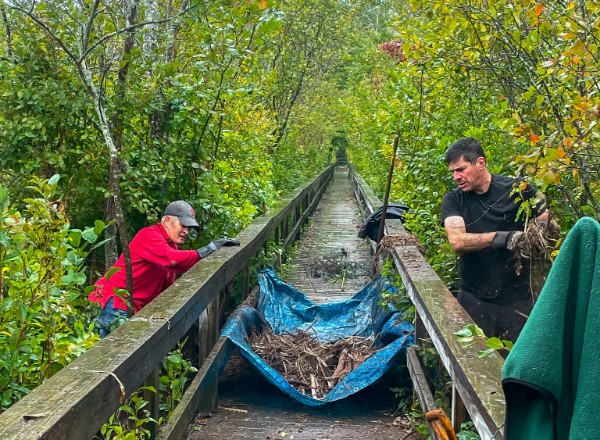
Stewardship is the act of caring for the land and its resources. MECT’s land stewardship efforts seek to balance the protection of the natural resources while allowing for appropriate public access, use, and enjoyment of these very special places. MECT’s primary stewardship activities include maintaining our trail system, cataloging and protecting the natural resources on MECT property, certifying vernal pools, monitoring conservation restrictions that the organization holds, and implementing projects to improve public access to MECT properties. We welcome volunteers to join in many of these activities! We host Trail Work days for volunteers to help with blazing, trash cleanup, sign installation, bridge building, and brush removal.
Recent Activities
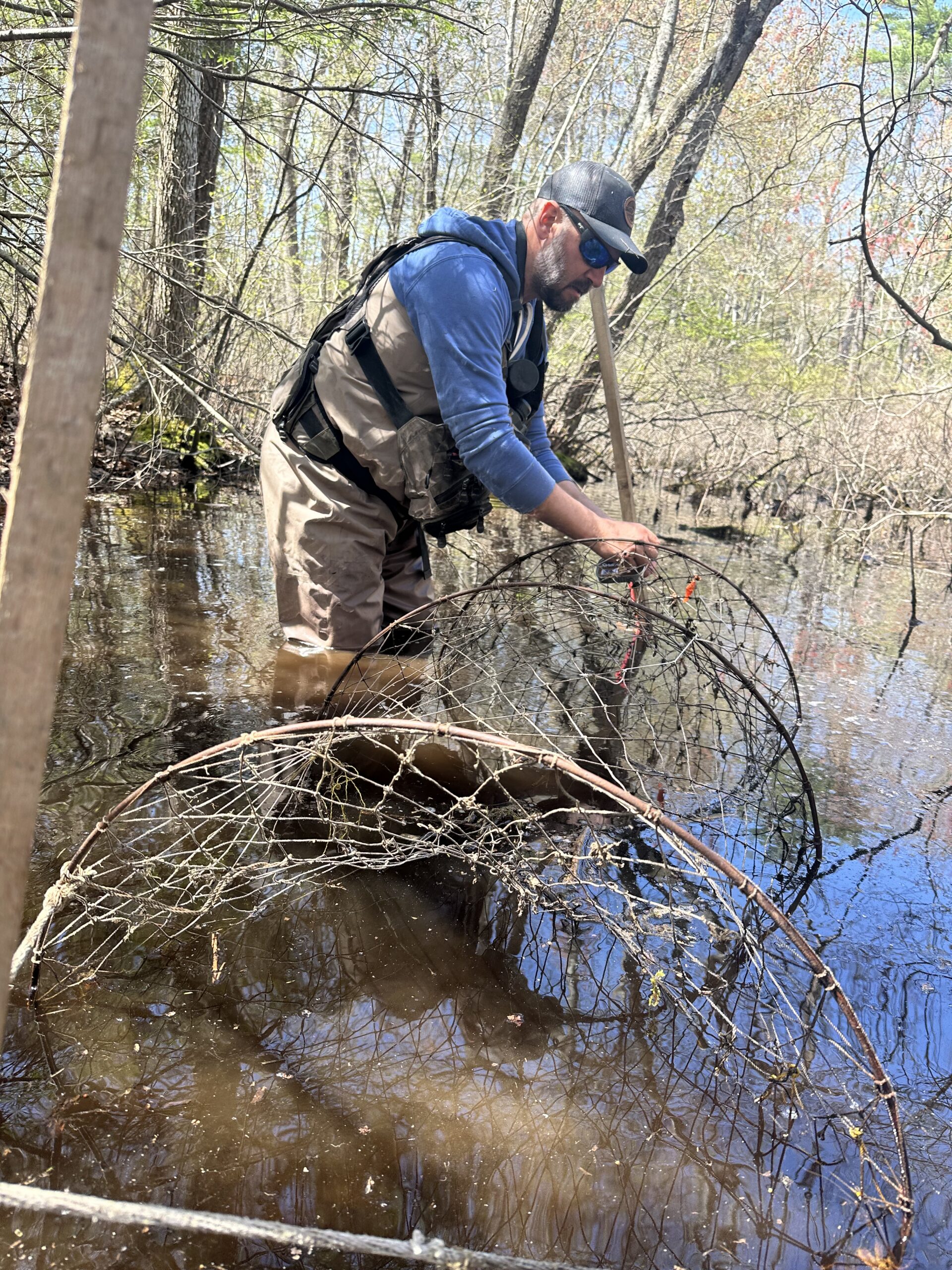
- In 2021 we certified three vernal pools in the vicinity of the proposed Shingle Place Hill 40B development which further constrained the designed project on the difficult parcel. We conducted salamander studies in 2021 and 2022 with Cape Ann Vernal Ponds on several ponds and wetlands in the Wilderness Conservation Area through state-permitted salamander trapping during the breeding season for mole salamanders, and we have set up “cover traps” to help us identify salamander populations in the uplands. We invited the MA Cold Water Fisheries scientists to explore the upper reaches of Sawmill Brook and Cat Brook for the presence of brook trout. We verified the presence of several threatened species that had been previously identified, and we’re happy to say the populations are strong. We installed and collected data from monitoring wells to measure the temperature and height of groundwater.
- We’ve continued collecting obligate species documentation (photographing egg masses of salamanders and wood frogs, or the presence of fairy shrimp) and submit data to the state to obtain certification of these pools. The town of Manchester has given us permission to certify the pools on town-owned land, and we are seeking permission to certify vernal pools on privately owned land as well. This adds a layer of protection to some of the areas that are not yet under permanent conservation. In the past five years we have received certification on over 30 pools, and we have many more in the process.

Previously, we hired consultants to conduct environmental studies including:
- 2004 RARE SPECIES AND VERNAL POOL SURVEY
- 2005 RARE SPECIES AND VERNAL POOL SURVEY
- 2013 WILDERNESS CONSERVATION AREA MANAGEMENT
- 1985 MANAGEMENT PLAN FOR THE WILDERNESS CONSERVATION AREA
In 2005, MECT published a Vascular Plant Survey of the Manchester Essex Woods. The study was done by longtime MECT volunteer Erika Sonder and funded by a grant from the Massachusetts Environmental Trust. The survey lists over 300 vascular plants found in the Wilderness Conservation Area.