Turtle Watch: Blanding’s Turtles
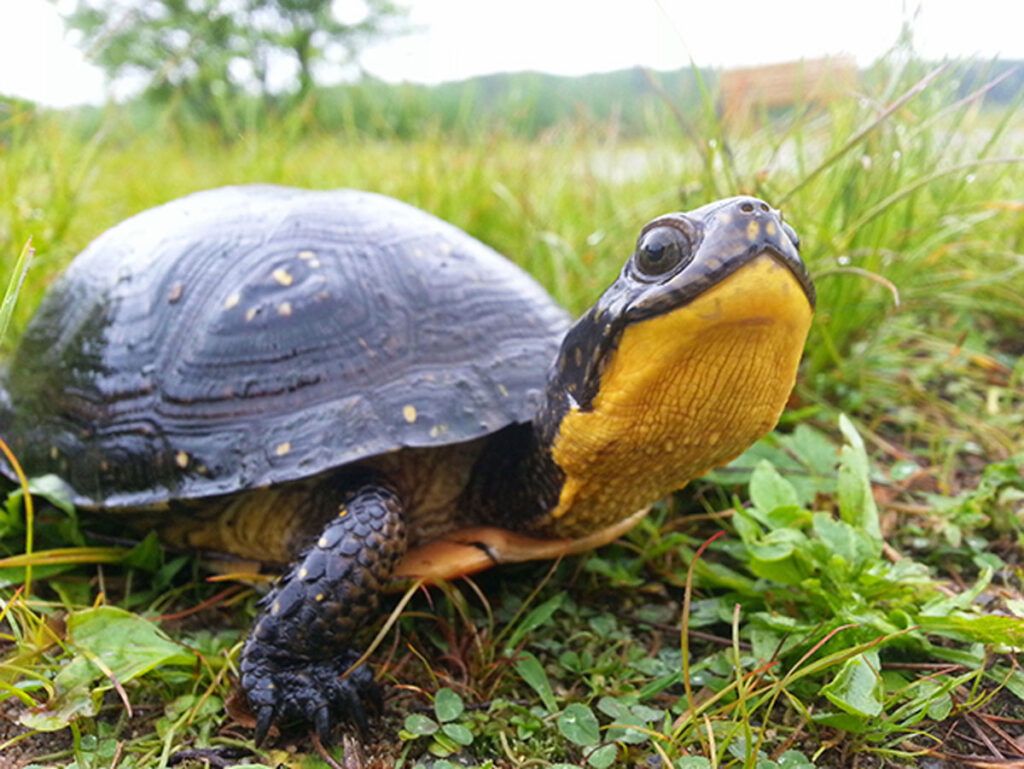
A rare and threatened species in our midst! You can impact this turtle species’ future right here in Essex (and maybe Manchester, too.)
Sign Up for Turtle Watch Alerts
Help us identify where these turtles are by joining the MECT Turtle Watch. Subscribe here!
These turtles are known to travel over a mile, covering an average of 40 acres during a single season, and they keep traveling at a turtle’s speed into their eightieth and ninetieth years! We are encouraged by our 2025 findings, but need photos for accurate documentation with the state agency to protect the turtles through permitting.
Take a picture. Report turtle sightings.
We need photos to document that they are still roaming in Essex and possibly in Manchester. Send photos to us at conserve@mect.org with information about the date and location or give us a call at 978-890-7153.
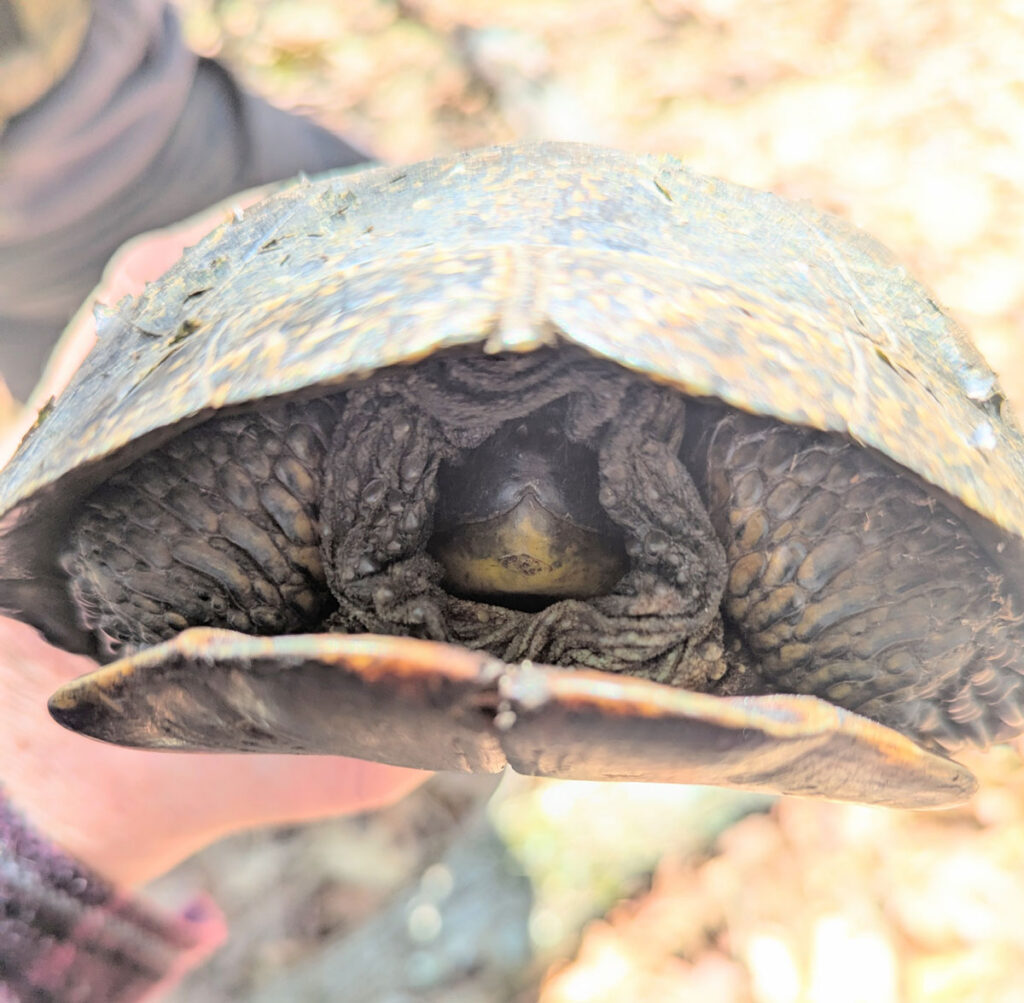
These will help us document the extent of their territories. Through education, signage and safe travel and nesting areas on conservation land, we hope to support the existing local turtle population. We will not share exact locations. Please respect these beauties and their desire to live freely outdoors. It is unlawful to possess Blanding’s Turtles in Massachusetts. Handling turtles requires a state permit. Please refrain from touching turtles, unless you are facilitating a road crossing.
Help Save Blanding’s Turtles
The MA Natural Heritage Endangered Species Program tracks and protects endangered species in our state. The last time someone reported a Blanding’s Turtle here was many years ago – though the program believes that they certainly live in our area today. The program is tight on resources, and has not dedicated them to turtles, salamanders and other endangered species in our area. They’ve remarked that this region is far away from their headquarters. So it’s up to us to document the local population and make sure the turtles live among us as safely as possible.
We believe that protecting the small populations of Blanding’s Turtles that live in our preserved areas – and outside of our preserved areas is important – we just need to know where they are, so that we can help! These turtles are sensitive to loss of safe connectivity in their territory between their aquatic habitats, and their nesting habitats. Depending on where they are documented we can consider a number of mitigation efforts like creating suitable nesting habitat on conservation land and road-free paths to get there.